





Think about the last time you ordered something online. You probably wondered one simple thing right away. When will it actually arrive? That small question sits quietly in every shopper’s mind. On your Shopify store, the answer can make or break the sale.
Delivery dates shape how much shoppers trust your store. A clear date brings comfort, while a vague one breeds doubt. Many merchants still guess at delivery times or leave them blank. That choice quietly costs sales every single day. This guide will help you fix that for good.
We will compare dynamic vs static delivery dates in plain terms. You will learn how each option works and where it fits. By the end, you will know which one suits your store. Let us start with why delivery dates matter so much. The numbers here may surprise you.
Key Takeaways
- Delivery dates strongly influence trust, conversions, and repeat sales.
- Static delivery dates are fixed and simple but often inaccurate.
- Dynamic delivery dates adjust to real conditions and shopper location.
- Most Shopify merchants gain more from dynamic delivery dates today.
- AI makes dynamic delivery dates far more accurate and cost-efficient.
- Clear, visible dates reduce cart abandonment and support questions.
- Apps make dynamic delivery dates easy to set up on Shopify.
Why Delivery Dates Matter for Shopify Merchants
Shoppers care about delivery timing more than ever before. In fact, 62% of consumers value an accurate delivery date over fast shipping. That single fact changes how you should think about delivery. Speed is nice, but certainty wins the sale more often. People simply want to trust the promise you make.
Missing dates push shoppers straight toward your competitors. Research shows 73% of shoppers say a visible delivery date sways their buying decision. Even worse, 40% will not buy without a date at all. That is a huge share of lost revenue for many stores. A blank delivery field is a silent sales killer.
Clear dates also lift your checkout conversion in real ways. One A/B test found that shoppers without dates dropped off far more. They showed a 10.3% higher drop-off before the payment step of checkout. Case studies also link specific dates to 13 to 25% more conversions. Delivery clarity is one of the easiest wins available.
Slow or unclear delivery also drives shoppers away for good. Nearly 63% of consumers pick a different retailer when shipping takes over two days. Around 43% have abandoned a cart due to slow shipping speeds. These shoppers rarely return once they feel let down. Your delivery promise protects both the sale and the relationship.
What Are Static Delivery Dates?
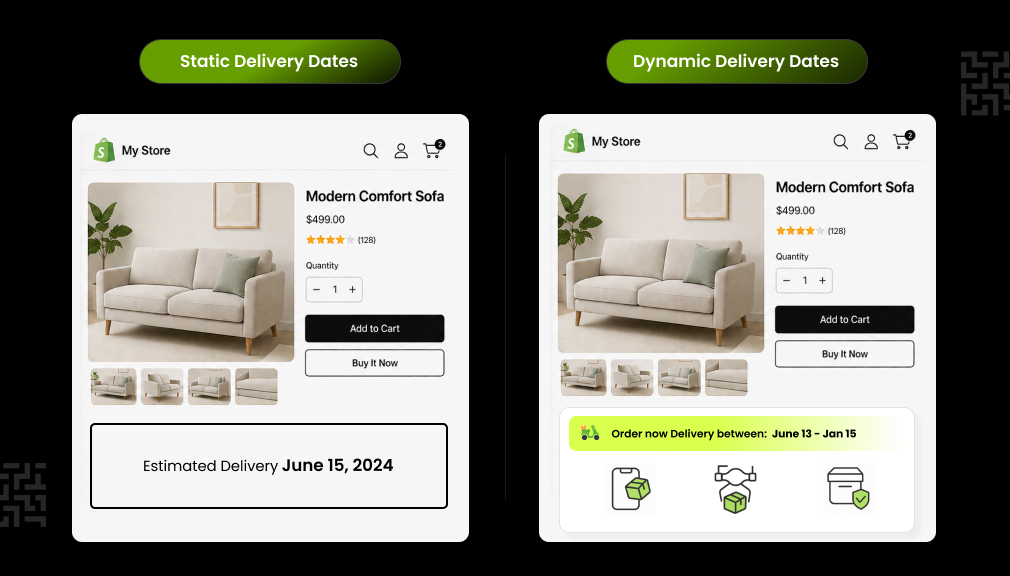
Static delivery dates are fixed estimates you set by hand. They do not change based on real-time conditions or orders. A common example is “Ships in 5 to 7 business days.” Another is a simple line like “Delivered by next week.” These messages stay the same for every shopper who visits.
Static dates are easy to set up and understand quickly. You write one rule, and it shows on your product pages. For small stores with steady shipping, this can work fine. It gives shoppers at least some idea of timing. That beats showing no delivery information at all.
But static delivery dates carry some real weaknesses too. They ignore order cut-off times, holidays, and stock levels. A “3 to 5 day” promise may be wrong on a Friday night. It also skips the shopper’s actual location and shipping distance. Over time, these gaps can break trust and cause complaints.
Here is where static delivery dates tend to fall short:
- They do not adjust for weekends, holidays, or cut-off times
- They ignore the shopper’s location and shipping distance
- They cannot reflect low stock or backorder delays
- They risk over-promising and disappointing your customers
What Are Dynamic Delivery Dates?
Dynamic delivery dates are smart, real-time estimates that adjust. They change based on many live factors behind the scenes. These include order time, cut-off windows, holidays, and stock. They also factor in the shopper’s location and shipping method. The result is a date that feels accurate and personal.
Imagine a shopper visits your store on a Friday evening. A dynamic system knows the weekend cut-off has already passed. So it shows a realistic date, not an overly hopeful one. Another shopper far away sees a slightly later arrival date. Each person gets a promise your store can actually keep.
Dynamic dates match what modern shoppers now expect from stores. They also reduce “where is my order” questions after the sale. Brands report 20 to 30% fewer support tickets when they share proactive delivery updates. Fewer questions mean less daily work for your support team. Accuracy here saves money and builds lasting customer trust.
Dynamic vs Static Delivery Dates: The Key Differences
The core difference comes down to one word: adaptability. Static dates stay frozen, while dynamic dates respond to reality. This gap shapes how accurate and trustworthy each option feels. For growing Shopify merchants, that difference matters a great deal. Let us break it down clearly below.
Here is how dynamic vs static delivery dates compare:
- Accuracy: Dynamic dates reflect real conditions; static dates often guess.
- Effort: Static dates need little setup; dynamic dates need smart tools.
- Personalization: Dynamic dates adjust by location; static dates treat all shoppers alike.
- Trust: Dynamic dates keep promises; static dates risk broken ones.
- Scale: Dynamic dates handle growth; static dates strain as orders rise.
Static dates suit very small or simple stores the best. Dynamic dates fit stores that want accuracy and steady growth. Most merchants gain more from a dynamic approach over time. Your choice depends on your size, goals, and shipping setup.
How AI Powers Dynamic Delivery Dates
Artificial intelligence has made dynamic dates smarter than ever. AI studies past shipments to predict future delivery times. It learns from carrier data, routes, and seasonal patterns constantly. Each completed order makes the next prediction more accurate. This is a huge leap beyond simple manual estimates.
The accuracy of these AI tools is now truly impressive. One model reached 78% overall accuracy across a wide network of shipping carriers. For its top carriers, that accuracy climbed to nearly 90%. These predictions often land within a very tight time window. Such precision was almost impossible just a few years ago.
AI also cuts costs across your whole delivery process. Companies using AI logistics report 15% lower logistics costs on average, according to industry research. Predictive analytics also improve delivery efficiency by 20 to 25%. These savings add up quickly for busy Shopify stores. Smarter dates mean happier customers and healthier margins.
Which Delivery Date Option Should You Choose?
Your best choice depends on your store’s size and needs. Very small stores with one product may start with static dates. They offer basic clarity without much setup or cost. But even small stores often outgrow this simple approach fast. Accuracy becomes harder as orders and locations increase.
Most Shopify merchants benefit more from dynamic delivery dates. They handle holidays, cut-offs, stock, and distance automatically. This keeps your promises honest as your store grows bigger. Dynamic dates also protect trust during busy peak seasons. That trust turns into repeat buyers and stronger reviews.
Ask yourself a few simple questions before you decide:
- Do you ship to many different regions or countries?
- Do your delivery times change with seasons or stock?
- Do you get many “where is my order” messages?
- Do you plan to grow your order volume soon?
If you answered yes to any, dynamic dates fit you. They scale with your store and keep shoppers feeling confident. Static dates work only for the simplest shipping setups today.
How to Set Up Dynamic Delivery Dates on Shopify
Setting up dynamic delivery dates on Shopify is easier than many merchants expect. With the right app, you can quickly set up dynamic delivery dates on Shopify using smart automation instead of manual updates. A reliable delivery date app calculates estimated delivery dates based on cut-off times, holidays, customer location, inventory, and shipping rules. You only need to configure the rules once, and the app automatically displays accurate delivery estimates for every order.
Follow these simple steps to get started the right way:
- Pick a trusted delivery date app from the Shopify App Store
- Set your processing time, cut-off hours, and off days
- Add rules for holidays, regions, and product stock levels
- Show the delivery date on product, cart, and checkout pages
- Test the display and confirm that your dates look accurate
Place your delivery date where shoppers can easily see it. The product page and checkout are the most powerful spots. Clear, visible dates reduce hesitation right before the sale. Keep testing and refining your rules as your store grows. Small tweaks here often bring real conversion gains.
Dynamic vs Static Delivery Dates: Side-by-Side Comparison
| Feature | Static Delivery Dates | Dynamic Delivery Dates |
| Setup effort | Low – manual one-time entry | Moderate – app or automation required |
| Accuracy | Same estimate for every order | Calculated per order, in real time |
| Personalization | None – one message for all customers | Based on location, product, and stock |
| Weekends and holidays | Not factored in automatically | Automatically excluded |
| Multiple warehouses | Not supported | Fully supported |
| Best fit | Small, local, single-warehouse stores | Growing, multi-location, nationwide stores |
| Impact on trust | Can erode trust if estimates slip | Builds trust through accurate promises |
The Hidden Costs of Inaccurate Delivery Dates
Wrong delivery dates cost more than a single lost sale. They quietly drain your time, money, and customer goodwill. Every missed promise can spark a support ticket or refund. These small costs pile up fast across many orders. Accuracy protects your margins as much as your reputation.
Inaccurate dates also push up your return and refund rates. Deliveries that arrive too early or late upset many buyers. Each day of delay can nudge returns slightly higher. Late orders often lead to “where is my order” messages too. Static dates make these costly problems far more likely.
Dynamic delivery dates help you avoid most of this pain. They keep promises realistic, so fewer orders disappoint shoppers. Fewer complaints mean lower support costs and happier reviews. This is why accuracy matters far beyond the checkout page. Honest dates quietly protect your whole business.
Common Delivery Date Mistakes to Avoid
Even good merchants make simple delivery date mistakes often. Small errors here can undo your hard-won customer trust. Knowing these pitfalls helps you sidestep them with ease. A little care upfront saves many headaches later on. Watch out for these common traps below.
- Promising fast dates you cannot reliably keep every time
- Forgetting to update dates for holidays and weekends
- Hiding the delivery date until the final checkout step
- Using one static date for every region and product
- Never testing whether your promised dates match reality
Fixing these mistakes is usually quick and very rewarding. Show honest dates early and adjust them for real conditions. Test your promises against actual delivery times each month. These simple habits keep your delivery dates trustworthy and useful. Small corrections often lead to steady conversion gains.
Conclusion
Delivery dates are far more than a small checkout detail. They shape trust, conversions, and how shoppers feel about your store. Static delivery dates offer simple clarity for the smallest shops. But dynamic delivery dates deliver the accuracy modern shoppers expect. For most Shopify merchants, dynamic dates are the smarter long-term choice.
The data makes this decision clear and simple to act on. Shoppers want honest, accurate dates they can truly rely on. AI and smart apps now make dynamic delivery dates easy to run. Start small, set your rules, and watch buyer confidence grow. Your delivery promise could become your strongest sales tool yet.
Frequently Asked Questions
1. What is the difference between static and dynamic delivery dates?
Static delivery dates show the same fixed estimate to every customer, regardless of location or product, while dynamic delivery dates calculate a unique estimate for each order based on factors like shipping address, inventory, and processing time.
2. Which delivery date method is better for Shopify?
Dynamic delivery dates are generally better for Shopify stores that ship to multiple regions, use more than one shipping method, or operate from several warehouses.
3. Can Shopify calculate delivery dates automatically?
Yes, Shopify can calculate delivery dates automatically when paired with a delivery date app or Shopify’s own Shop Promise tools, which factor in carrier transit times, processing speed, and customer location. Without an app, Shopify does not generate dynamic estimates on its own, so most merchants rely on third-party delivery date apps for this functionality.
4. Do dynamic delivery dates improve conversion rates?
Yes, dynamic delivery dates have been shown to improve conversion rates because shoppers trust a specific, accurate date more than a vague shipping range. Case studies have reported checkout conversion lifts of roughly 12 to 25% after switching from static ranges to dynamic delivery estimates.
5. How do dynamic delivery dates handle holidays?
Dynamic delivery date systems automatically detect holidays and non-working days, then adjust the estimated delivery window so customers never see an inaccurate promise around peak seasons. This removes the need for merchants to manually update their delivery messaging every time a holiday approaches.
6. Can I show different delivery dates for different products?
Yes, dynamic delivery date tools let merchants assign different processing times, shipping methods, or fulfillment rules to individual products or collections. This means a made-to-order item and an in-stock item can display two different, accurate delivery windows on the same store.
7. Do dynamic delivery dates work with multiple warehouses?
Yes, dynamic delivery dates are built to support multiple warehouses by calculating estimates based on which location actually fulfills the order. This is one of the biggest advantages over static delivery dates, which cannot account for inventory spread across different fulfillment centers.
8. Are dynamic delivery dates worth it?
For most growing Shopify stores, dynamic delivery dates are worth the investment because they reduce cart abandonment, lower delivery-related support tickets, and build long-term customer trust. The return tends to grow alongside the business, since accurate delivery promises matter even more as shipping zones, product catalogs, and warehouses expand.

Shopify Expert
Dipen Panchal, Shopify Tech Lead at Setubridge Technolabs, brings over a decade of expertise as a Shopify Expert. Passionate about e-commerce growth, he specializes in UI/UX design, crafting intuitive, engaging solutions tailored for merchants and B2B clients to enhance user experiences.