



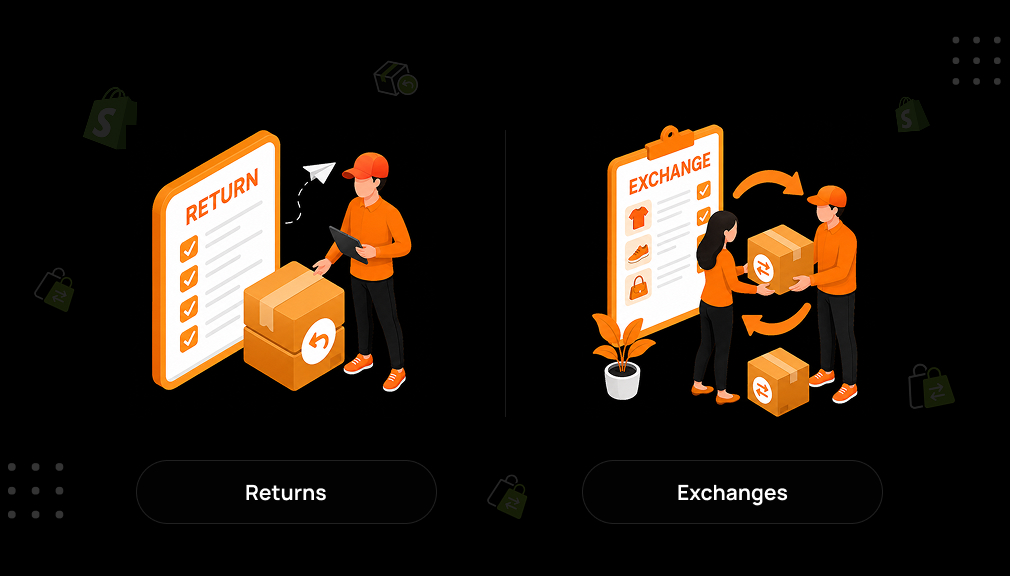
A shopper opens the box, and the shirt is one size too small. Now everything depends on what happens next. If your return process is a painful email chain, she asks for a refund and never comes back. If it is a smooth self-service portal, she swaps it for the right size in two clicks: same return, two very different outcomes for your revenue.
That is precisely the function served by an excellent returns application. Returns have become so huge that retail returns reached an amount of approximately $849.9 billion in 2025, and the average return rate for online orders remains at around 20%. For every $1 billion of online sales, retailers incur an amount of $145 million of returned products.
In this guide, we rank the best Shopify returns and exchanges applications for 2026. All ratings and reviews mentioned in this list are drawn from the actual app store page as of the writing of this article. We emphasize genuine recommendations, pros, cons, and store suitability of every application.
Key Takeaways
- Returns are a revenue moment: a refund loses the sale, but an exchange or store credit keeps it.
- A bad return pushes 71% of shoppers away, while an easy one brings most first-time buyers back.
- AfterShip Returns is the most-reviewed all-rounder; Loop leads for high-volume exchange-first brands.
- Return Prime, Cwill, Synctrack, and Yanet offer strong value and free plans for smaller stores.
- Look for exchange-first flows, store credit with a bonus, automation, and predictable pricing.
- EU stores should confirm support for withdrawal forms before choosing an app.
- Test one app for 30 days and watch your exchange rate and resolution time.
Comparison of Returns & Exchanges Shopify Apps
A high-level look at the nine apps in this guide. Ratings are from live App Store listings; pricing is approximate and should be verified on each listing.
| App | Rating (reviews) | Best for | Free / Paid starts from |
| AfterShip Returns | 4.7★ (1,390+) | Proven all-rounder | Free / $19+ |
| Return Prime | 4.8★ (726+) | Best value | Free / $19.99+ |
| Redo | 5.0★ (670+) | All-in-one platform | Free / $10+ |
| Loop Returns | 4.7★ (408+) | High-volume brands | Free / $155+ |
| ReturnGO | 4.8★ (358+) | Automation & AI | Paid only $147+ |
| Cwill Returns | 4.9★ (452+) | Built-for-Shopify value | Free / $29+ |
| ReturnZap | 4.9★ (102+) | Flat-fee pricing | Paid only $39+ |
| Synctrack Returns | 4.9★ (121+) | Budget pick | Free / $19.99+ |
| Yanet Returns | 4.8★ (262+) | Small stores | Free / $9.99+ |
The best Shopify returns & exchanges apps
1. AfterShip Returns & Exchanges
4.7 ★ (1,392+ reviews) · Best for: most stores wanting a proven, all-round platform
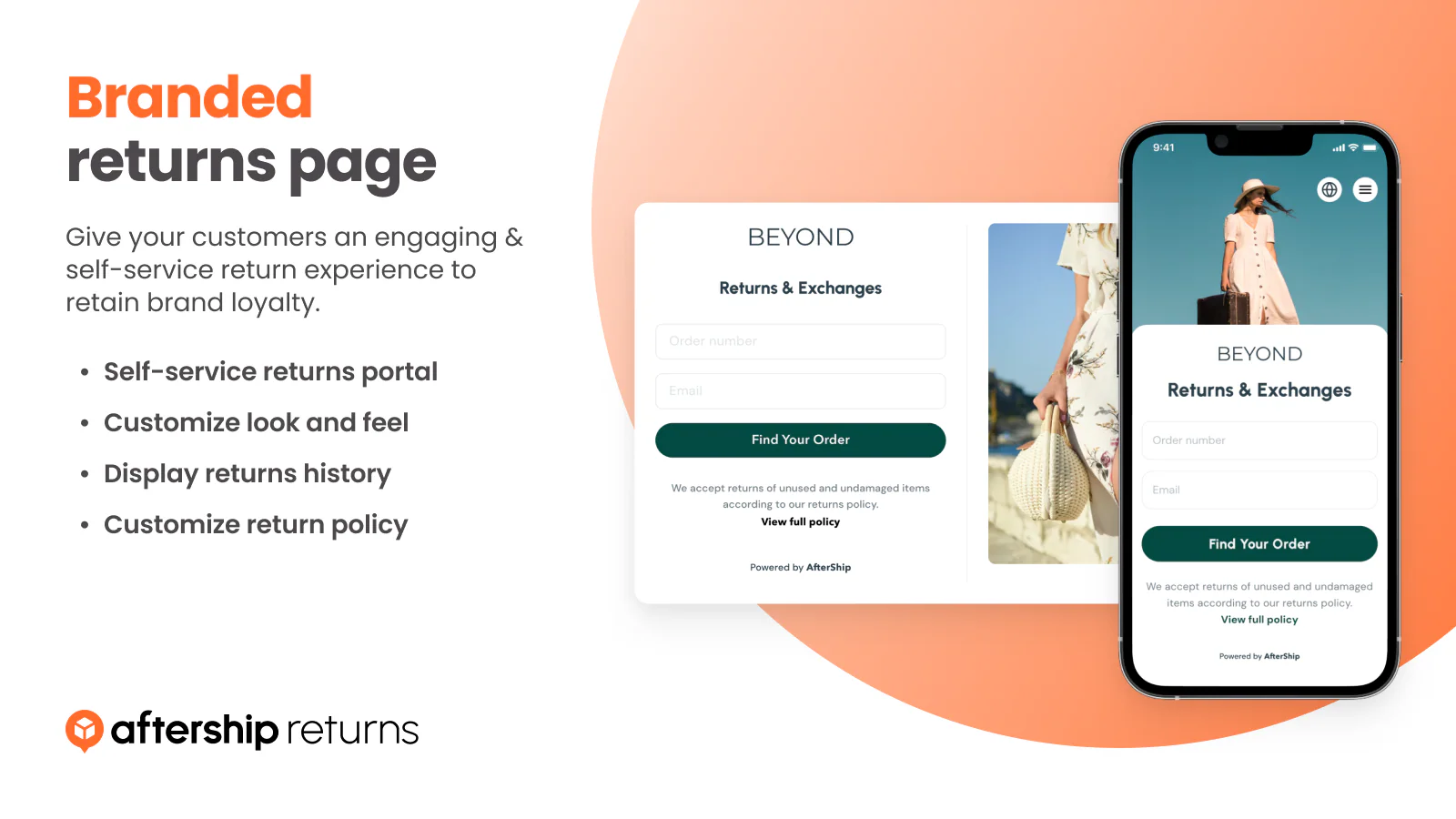
AfterShip is one of the most established names in post-purchase, and its returns app rides that trust. It gives customers a clean, branded portal and pushes exchanges and store credit to keep revenue in your store. Automated rules, discounted labels, and solid analytics round it out. It is “Built for Shopify” and pairs neatly with AfterShip order tracking.
- Strengths: Mature and widely used, strong analytics, deep automation, unified with the AfterShip suite.
- Watch-outs: The most useful automation sits on higher tiers, and some users want more hands-on onboarding.
Pricing: Free plan available; paid plans from $19/month.
Where does this app fit in your workflow? The cheapest return is the one that never happens, which is why it pays to prevent wrong-size returns before they happen with clear sizing.
→ View on the Shopify App Store
2. Return Prime: Return & Exchange
4.8 ★ (726+ reviews) · Best for: value seekers who still want real depth
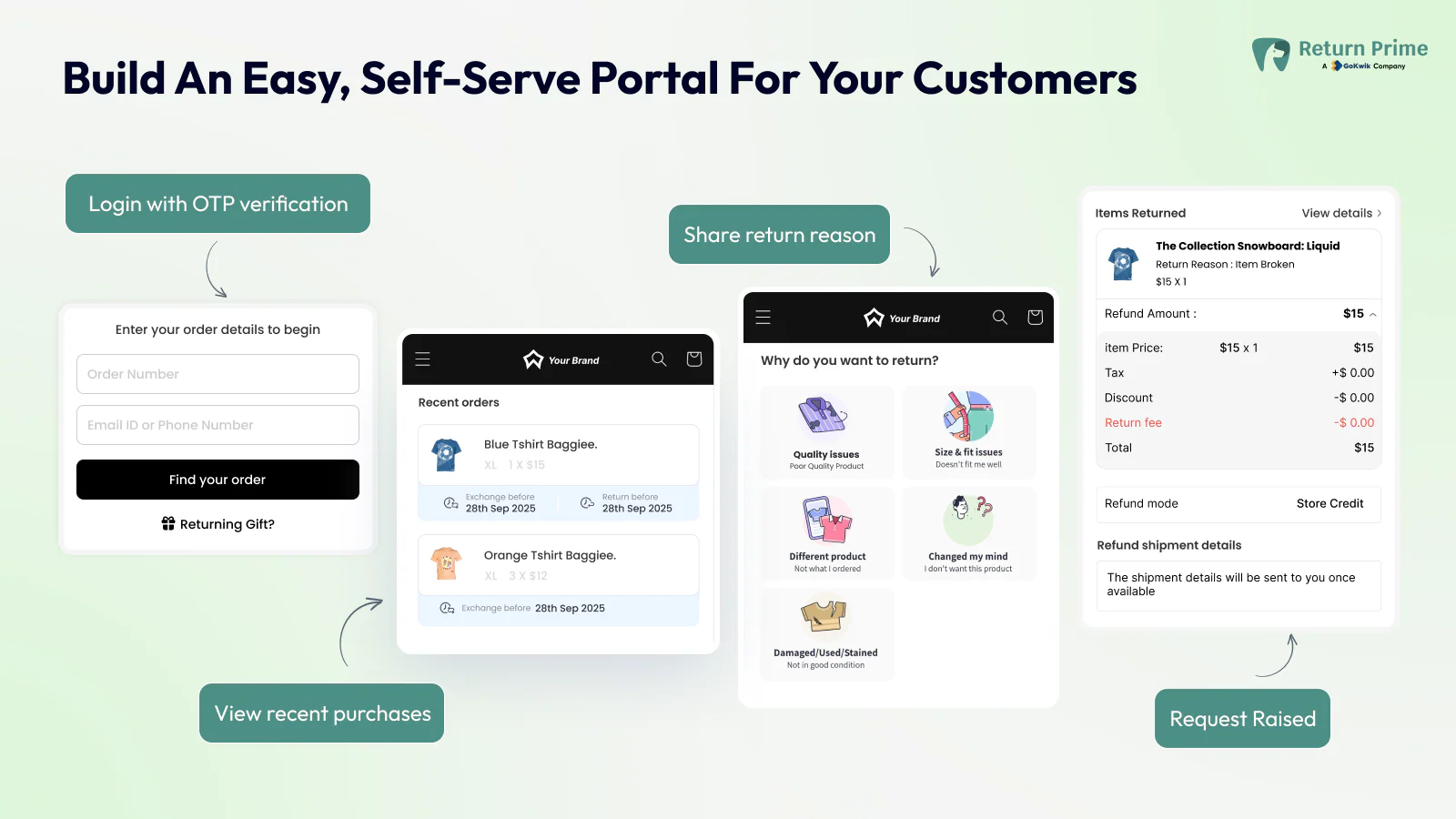
Return Prime hits the sweet spot between free basic tools and pricey platforms. It automates returns and exchanges, offers store credit and gift-card refunds, and gives customers a self-service portal. It also makes migrating from another returns app straightforward. For growing stores on a budget, it is a strong pick.
- Strengths: Generous free-to-install tier, good feature depth for the price, responsive support.
- Watch-outs: The dashboard and analytics feel less polished than premium options like Loop.
Pricing: Free plan available; paid plans from $19.99/month.
Where does this app fit in your workflow? Instead of refunding cash on every return, you can keep revenue in-store with store credit and protect the sale.
→ View on the Shopify App Store
3. Redo
5.0 ★ (671+ reviews) · Best for: modern brands wanting an all-in-one post-purchase platform
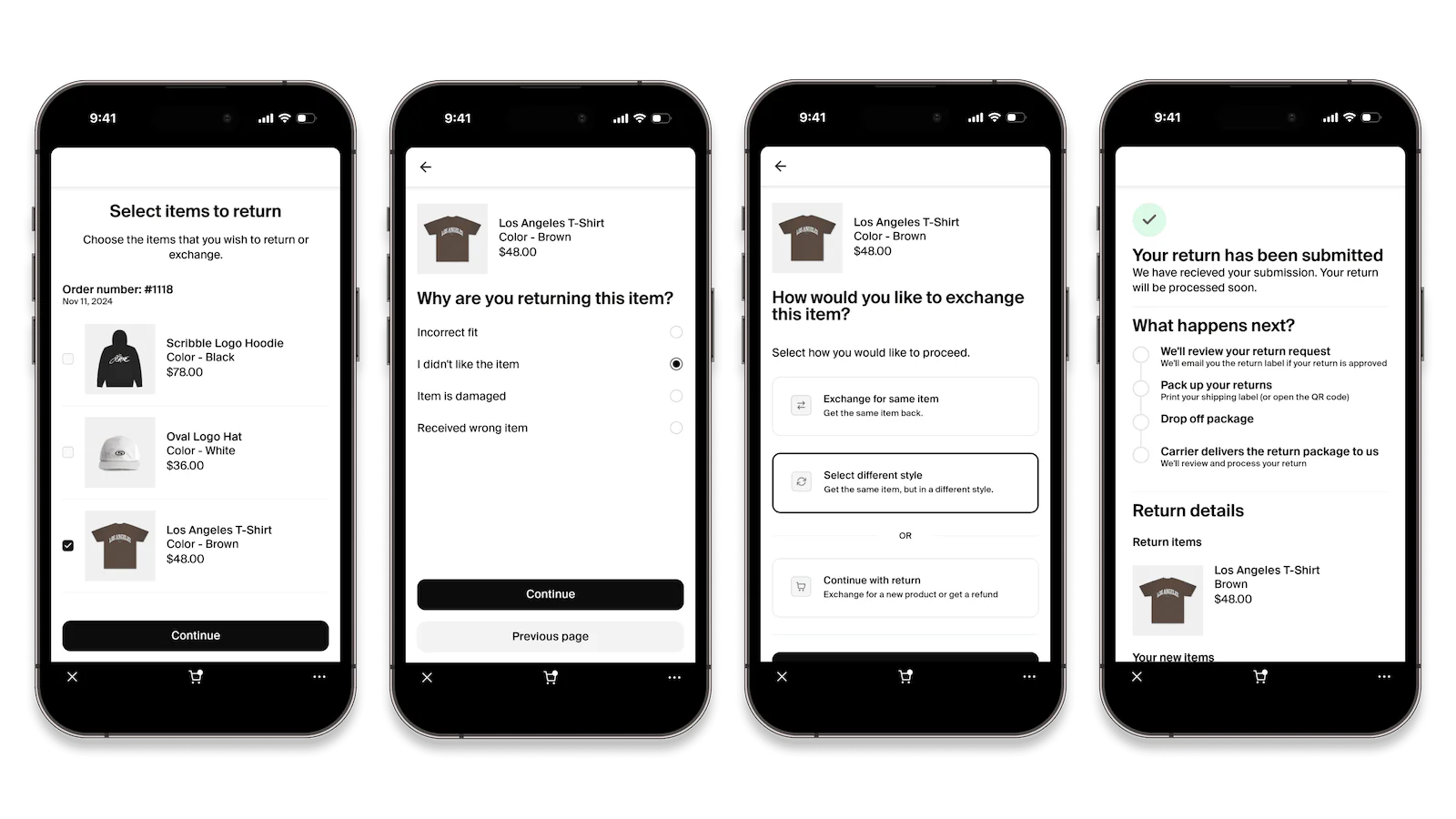
Redo is a newer, fast-rising platform that bundles returns and exchanges with package protection and other post-purchase tools. It can offer shoppers free or covered returns funded at checkout, which removes friction while protecting your margin. The experience is sleek and exchange-first. It suits brands that want more than a standalone returns tool.
- Strengths: Polished modern UX, exchange-first flows, combines returns with shipping protection.
- Watch-outs: A broader platform can be more than a small store needs, and its coverage model differs from flat pricing.
Pricing: Free plan available; paid plans from $10/month.
Where does this app fit in your workflow? A generous, visible returns process influences conversion too, since how a return policy affects the decision to buy is real for cautious shoppers.
→ View on the Shopify App Store
4. Loop Returns & Exchanges
4.7 ★ (408+ reviews) · Best for: established, high-volume brands that live on exchanges
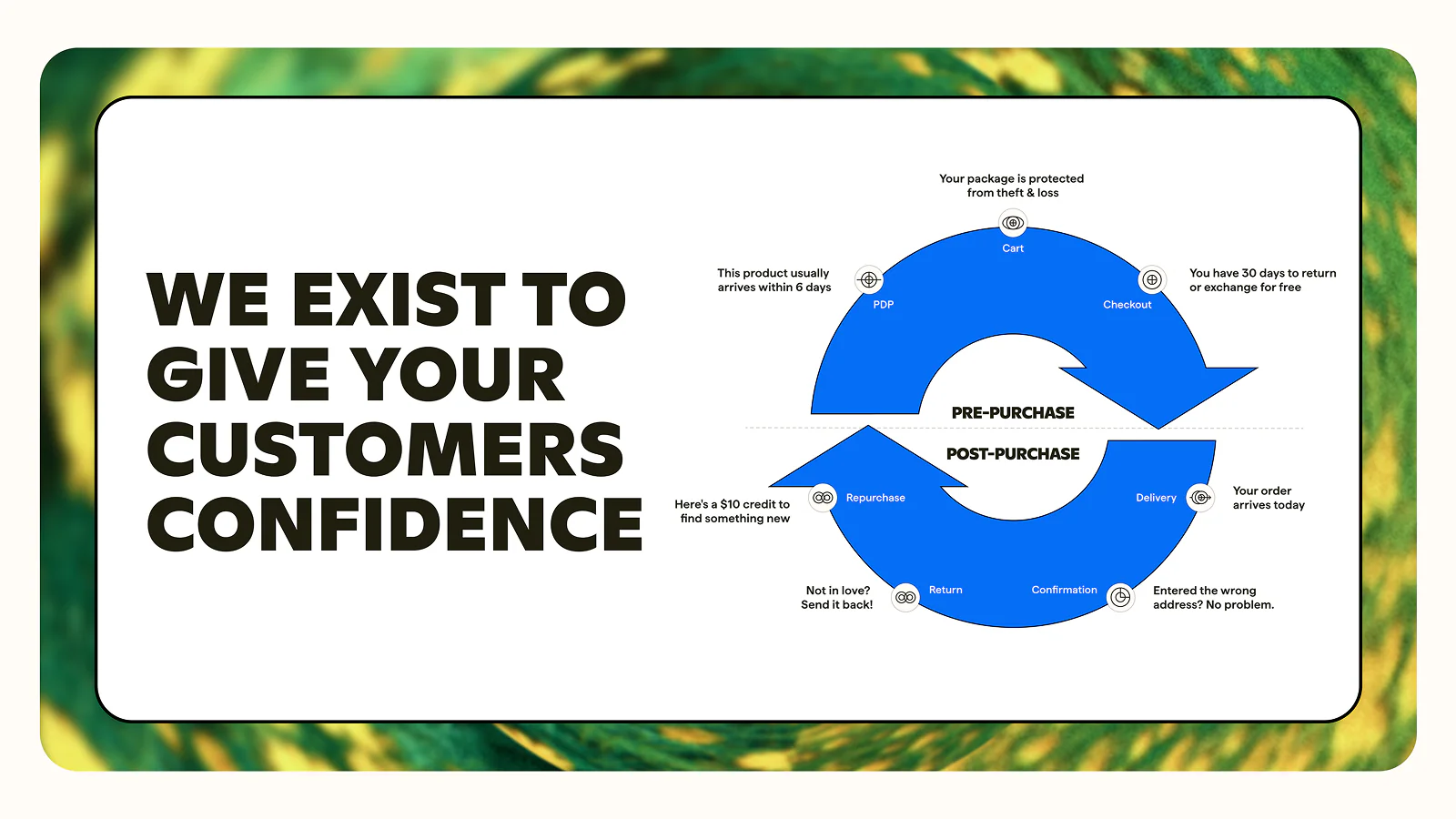
Loop is the premium, exchange-first leader, popular with larger Shopify brands. Its standout “Shop Now” flow lets shoppers exchange a return for anything in your catalog, often with a bonus credit. Deep workflow automation and rich analytics back it up. If exchanges are central to your strategy, Loop sets the standard.
- Strengths: Best-in-class exchange experience, powerful automation, strong analytics for scale.
- Watch-outs: Premium pricing makes it overkill for smaller stores or low return volumes.
Pricing: Free plan available; paid plans from $115/month.
Where does this app fit in your workflow? Some returns start with a delivery surprise, so set accurate delivery expectations up front to reduce disappointment-driven returns.
→ View on the Shopify App Store
5. ReturnGO Returns & Exchanges
4.8 ★ (358+ reviews) · Best for: automation-heavy teams that want exchange-first control
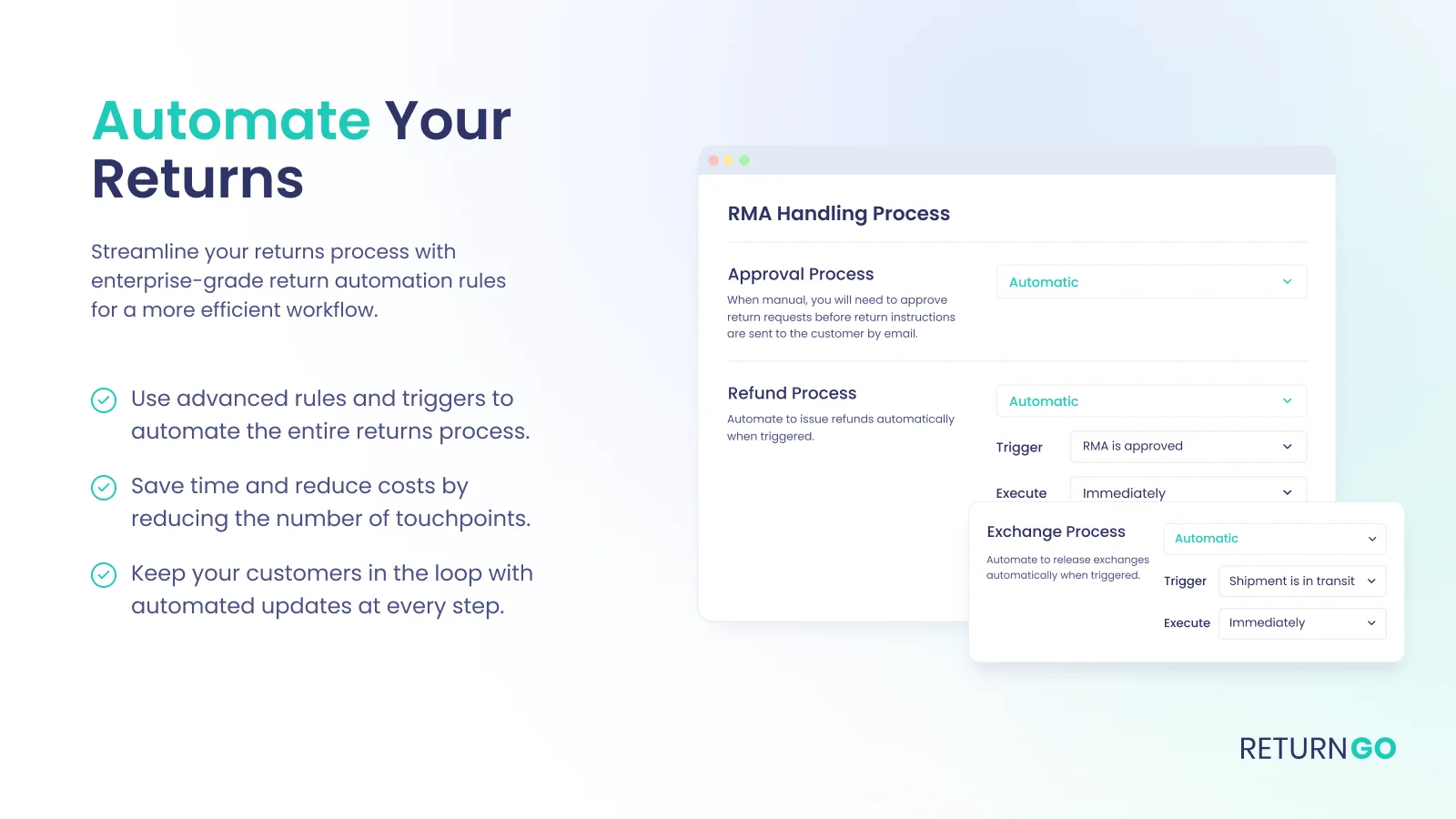
ReturnGO is built around rules-driven automation, with a growing set of AI features. It supports one-click variant and product exchanges, store credit, gift cards, and detailed eligibility rules. A branded portal and carrier integrations keep the experience smooth. It is a great fit when you want deep control without enterprise pricing.
- Strengths: Deep automation and customization, strong exchange-first tools, competitive pricing.
- Watch-outs: All that flexibility means a steeper setup and learning curve.
Pricing: Paid plans from $147/month.
Where does this app fit in your workflow? A smooth returns flow also needs the ability to generate the order paperwork that returns rely on, from invoices to credit notes.
→ View on the Shopify App Store
6. CWill Returns & Exchanges (by CWILL)
4.9 ★ (452+ reviews) · Best for: best-value “Built for Shopify” pick
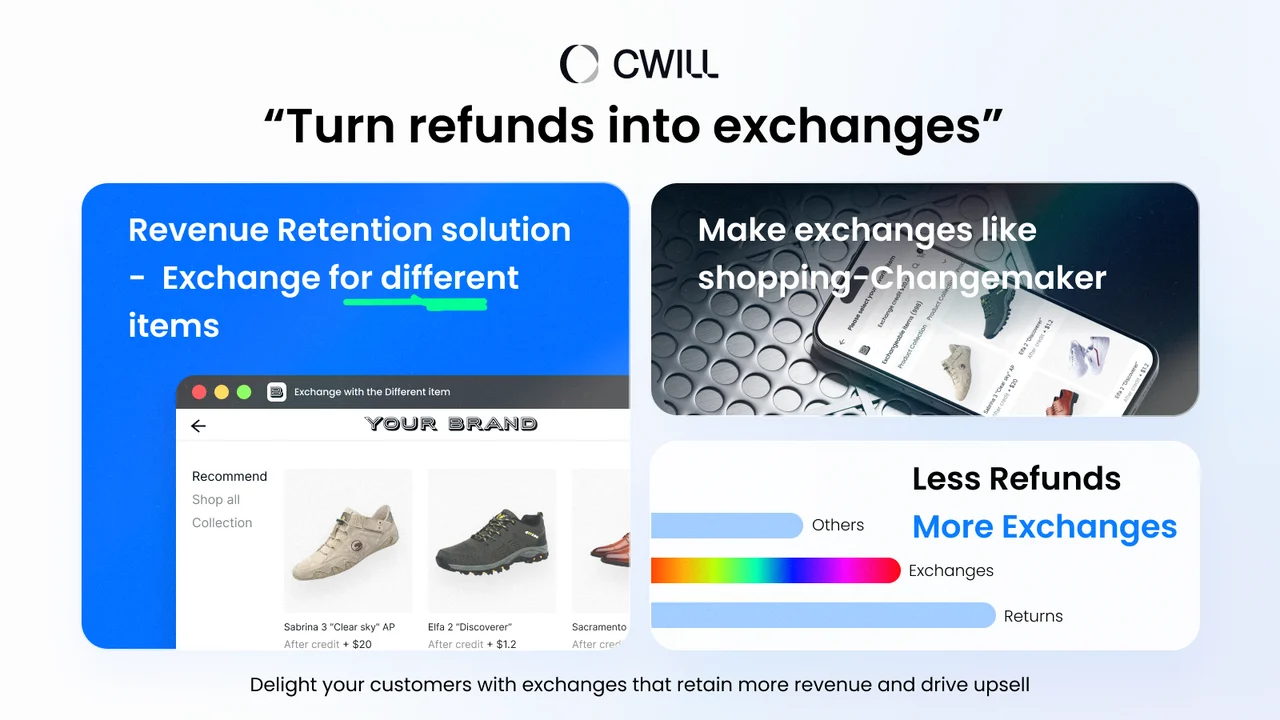
From the Channelwill team, Cwill Returns pairs a branded self-service portal with exchanges, store credit, and automated rules. It is “Built for Shopify” and works nicely alongside Cwill order tracking. The rating is excellent, and the pricing is friendly. It is a strong value option for growing stores.
- Strengths: High rating, affordable, Built for Shopify, solid support and tracking pairing.
- Watch-outs: Younger and smaller than AfterShip or Loop, with fewer enterprise extras.
Pricing: Free plan available; paid plans from $29/month.
→ View on the Shopify App Store
7. ReturnZap Returns & Exchanges
4.9 ★ (102+ reviews) · Best for: teams tired of per-return fees
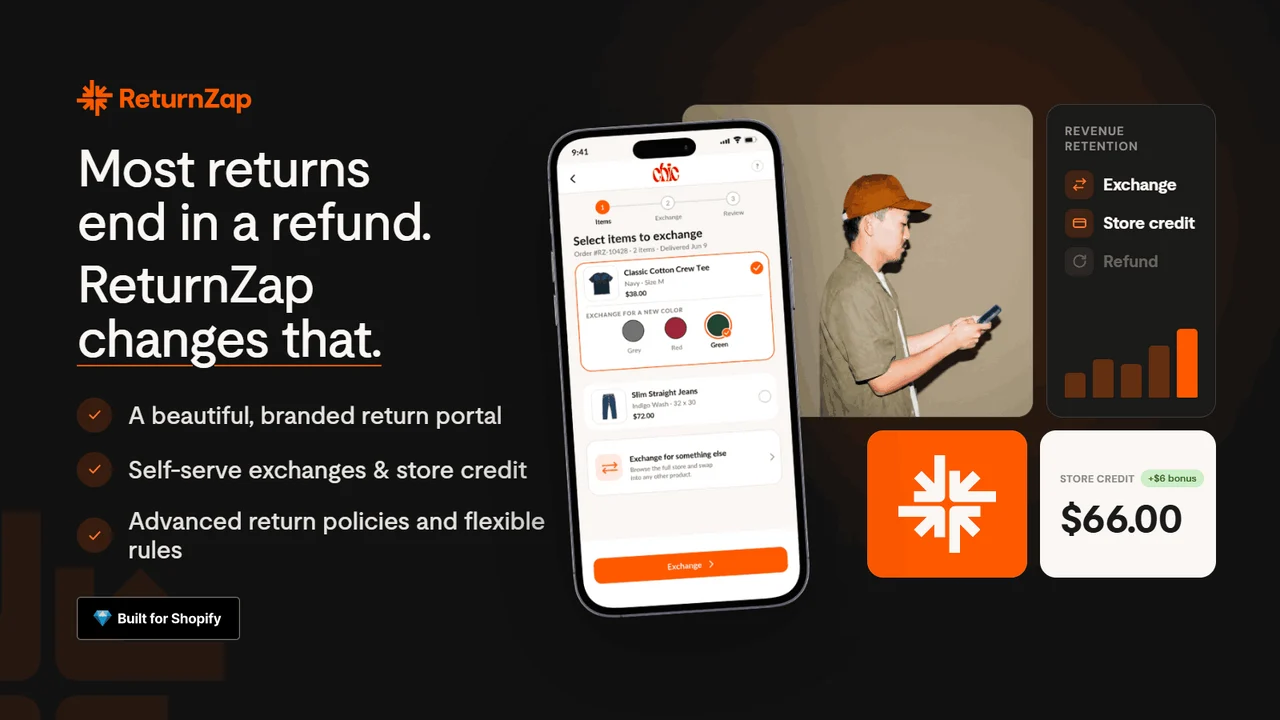
ReturnZap feels like a native workflow layer inside Shopify and is “Built for Shopify.” Its big draw is flat monthly pricing with no per-label or per-return fees, which keeps costs predictable. It offers flexible exchange logic, automation, and EU withdrawal support. It suits teams that want power without surprise charges.
- Strengths: Predictable flat pricing, built for Shopify, flexible exchange and automation logic.
- Watch-outs: Smaller review base and fewer flashy extras than the biggest platforms.
Pricing: Paid plans from $39/month.
→ View on the Shopify App Store
8. Synctrack Returns & Exchanges
4.9 ★ (121+ reviews) · Best for: budget-conscious stores that still want automation
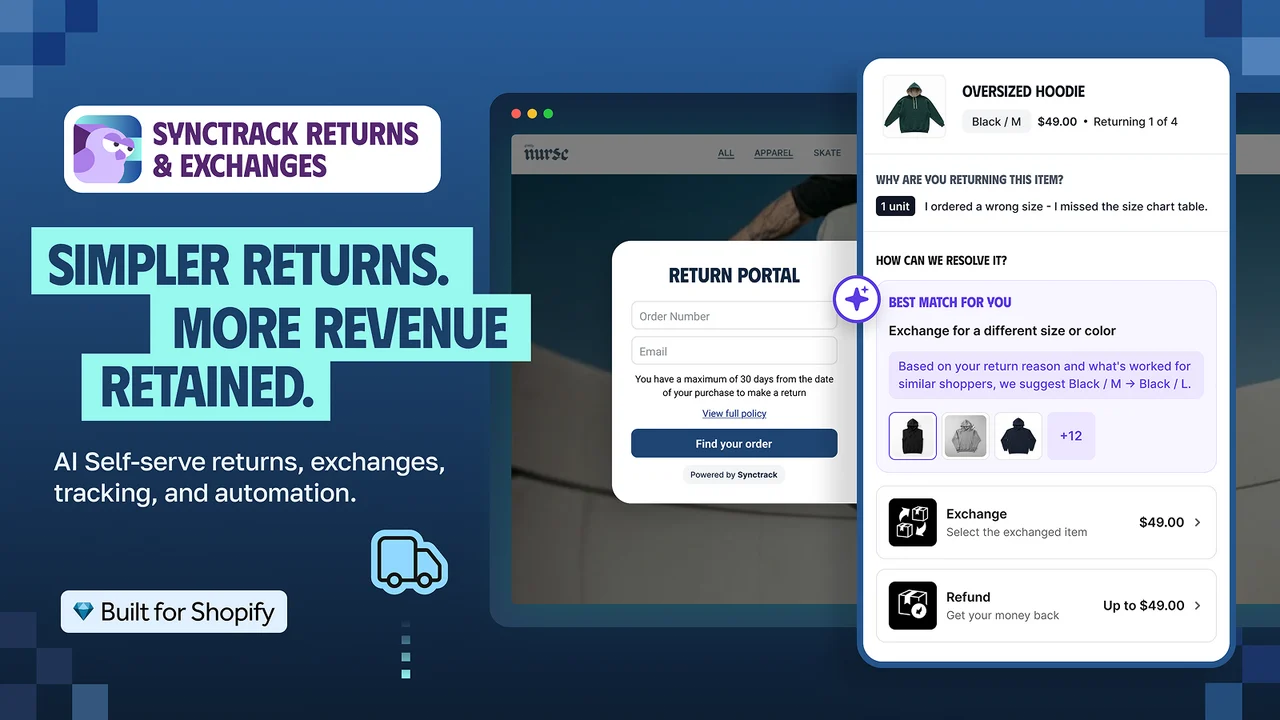
Synctrack Returns, from the Omega team, delivers affordable returns automation with a strong rating. It includes a branded portal, exchanges, store credit, and rules, plus EU withdrawal button support. It is “Built for Shopify” and easy to get running. For value-focused stores, it punches above its price.
- Strengths: Excellent value, Built for Shopify, EU-ready, quick to set up.
- Watch-outs: Fewer advanced or enterprise-grade features than premium tools.
Pricing: Free plan available; paid plans from $19.19/month.
→ View on the Shopify App Store
9. Yanet Returns & Exchanges
4.8 ★ (262+ reviews) · Best for: small stores that want a solid free plan
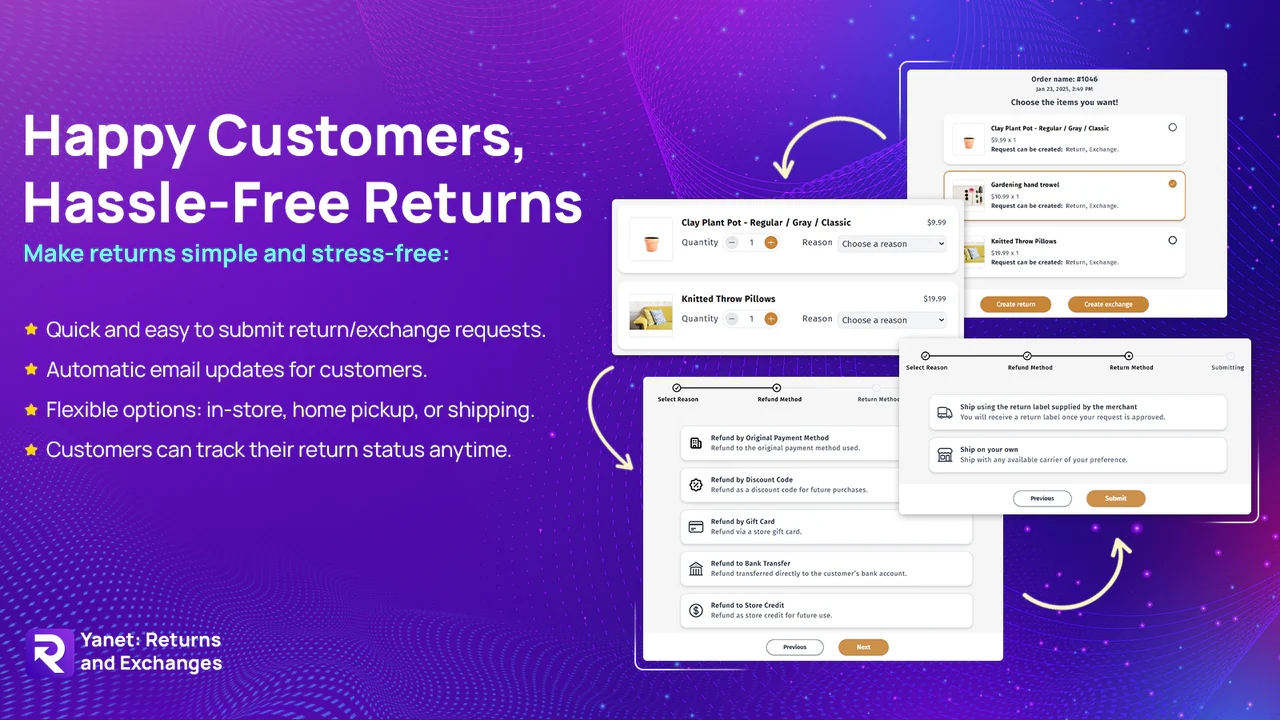
Yanet keeps things simple and affordable, which is ideal for smaller stores. It automates returns and exchanges, handles refunds, and manages return labels from a branded portal. It is “Built for Shopify” and quick to configure. If you are just moving off manual returns, it is an easy, low-cost start.
- Strengths: Good free plan, Built for Shopify, simple and easy setup.
- Watch-outs: Lighter on advanced automation and analytics than larger platforms.
Pricing: Free plan available; paid plans from $9.99/month.
→ View on the Shopify App Store
Why your returns app is really a revenue decision
Most merchants treat returns as a cost to survive. The smart ones treat them as a moment to keep the customer and the sale. The data shows why this mindset matters so much.
A bad return experience now drives customers away for good. In fact, 71% of shoppers say a poor return would stop them from buying again, up from 67% a year earlier. On the flip side, 76% of first-time buyers with an easy return say they would shop again. The return is a retention moment, not just a refund.
Here is the key idea the best apps are built around. A return is only a true loss when it ends in a cash refund. If the same return becomes an exchange or store credit, the revenue stays with your brand. A small 5-10% bonus on store credit reliably shifts refunds into exchanges.
This “exchange-first” approach is now standard among top brands. Across millions of returns, US merchants convert about 17% of returns into exchanges, and free returns are no longer the default; about 65% of merchants now charge a return fee on at least some outcomes. Every day a delivery is late lifts returns by about 1.1%, while every day early reduces returns by about 1.2%. The right app helps you strike this balance without losing loyalty.
Manual returns simply do not scale. Each return can cost $10 to $65 to process, and only about half of returned items resell at full price. A returns app automates the busywork, pushes exchanges, and shows you which products drive the most returns.
What to look for in a Shopify returns app
Most apps cover the basics. These features separate a good one from a great one for your store.
- Self-service portal. A branded returns page where customers start returns without emailing you.
- Exchange-first flows. Easy size or variant swaps, plus “shop the whole catalog” instant exchanges.
- Store credit with bonus. Turn refunds into credit, ideally with a small bonus to nudge the choice.
- Automation rules. Auto-approve eligible returns, set windows, fees, and return reasons.
- Shipping labels. Generate discounted return labels and track them in one place.
- Analytics. See return reasons and problem products so you can cut future returns.
- Fair pricing. Watch for per-return fees; flat pricing is easier to predict as you grow.
Specialized options worth knowing
A few apps solve a narrower job. If you want to offer paid “worry-free” return coverage at checkout, Seel Worry-Free Purchase (4.9★) focuses on return assurance. For returns bundled with warranties and shipping protection, look at Corso (4.8★). And if you sell into the EU, note the new withdrawal-form rules; apps like the EU Withdrawal Button & Form (4.9★) handle compliance, and several returns apps above include this too.
How to choose the right one for your store
The best app depends on your return volume and goals. Here is a simple way to decide.
- Just starting (under ~20 returns/month): A free plan is plenty. Try Yanet, Synctrack, Return Prime, or AfterShip’s free tier.
- Growing (~20-100 returns/month): Look at Return Prime, ReturnGO, Cwill, or ReturnZap for automation without high costs.
- High volume (100+ returns/month): Loop, ReturnGO, or Redo give you the deepest exchange-first tools and analytics.
- Selling in the EU: Make sure your app supports the EU withdrawal form, or add a dedicated compliance app.
Whatever you pick, most offer free plans or trials. Install one, run it for 30 days, and track two numbers: your exchange rate and your average resolution time. If both improve, you chose well.
Forthroute provides a branded self-service returns portal for Shopify, with configurable return policies and merchant-controlled approvals and refunds. The software has no monthly subscription charge or return-volume cap. Optional prepaid labels purchased through Forthroute are charged separately: the carrier’s price plus 1%, with the total rounded upward to the next ten cents.
The bottom line
There is no escaping returns, and consumers are rating your business based on how you handle them. The correct app makes the hassle of a full refund easy with just an exchange. Begin by assessing your return rate, select an app that suits your needs, and favor exchanges wherever possible. It can be as simple as that when done correctly.
Ratings and Pricing will be from the current listings and are frequently changing; make sure to check the correct information on the Shopify App Store listing page.
Frequently Asked Questions
What is the best returns app for Shopify?
There is no single winner, because the best app depends on your store’s size and goals. AfterShip Returns is the most established all-rounder and suits most stores, while Loop leads for high-volume, exchange-first brands.
What is the average ecommerce return rate?
On average, 20% of orders are returned online before 2026. There are wide variations depending on the industry. For example, apparel can go up to 20-40%, whereas electronics stand at 8-15%.
How do returns apps turn refunds into revenue?
They steer shoppers toward exchanges and store credit instead of cash refunds. A return is only a real loss when the money leaves your store, so keeping it as an exchange retains the revenue.
Are there free Shopify returns apps?
Yes, several quality apps offer free plans that suit small stores. Return Prime is free to install, and AfterShip, Cwill, Synctrack, and Yanet all have free tiers.
Do I need a returns app, or is Shopify’s native returns enough?
Shopify’s built-in returns are fine when you handle only a handful of returns a month. Once returns become a weekly task, a dedicated app saves real time and money.
What is the difference between a refund and an exchange for my store?
In the case of a refund, the money is returned to the client, and the sale is cancelled; hence, no revenue is realized from the transaction.
How much do Shopify returns apps cost?
Prices can vary depending on the type of pricing plan and whether it’s free, starting as low as $0 or going up to $150 and above.
Which returns apps are “Built for Shopify”?
Several apps in this guide carry the “Built for Shopify” badge, which signals high quality and native integration.

Shopify Expert
Dipen Panchal, Shopify Tech Lead at Setubridge Technolabs, brings over a decade of expertise as a Shopify Expert. Passionate about e-commerce growth, he specializes in UI/UX design, crafting intuitive, engaging solutions tailored for merchants and B2B clients to enhance user experiences.