





Picture a shopper on your Shopify store. She just found the perfect birthday gift for her sister. The party is this Friday. But your product page shows no arrival date. So she wonders, “Will this even get here in time?”
That small doubt is enough to lose her. She closes the tab and buys somewhere else. You never even knew she was there. This quiet moment repeats on Shopify stores every single day. Shoppers want your product, yet they fear it will arrive too late.
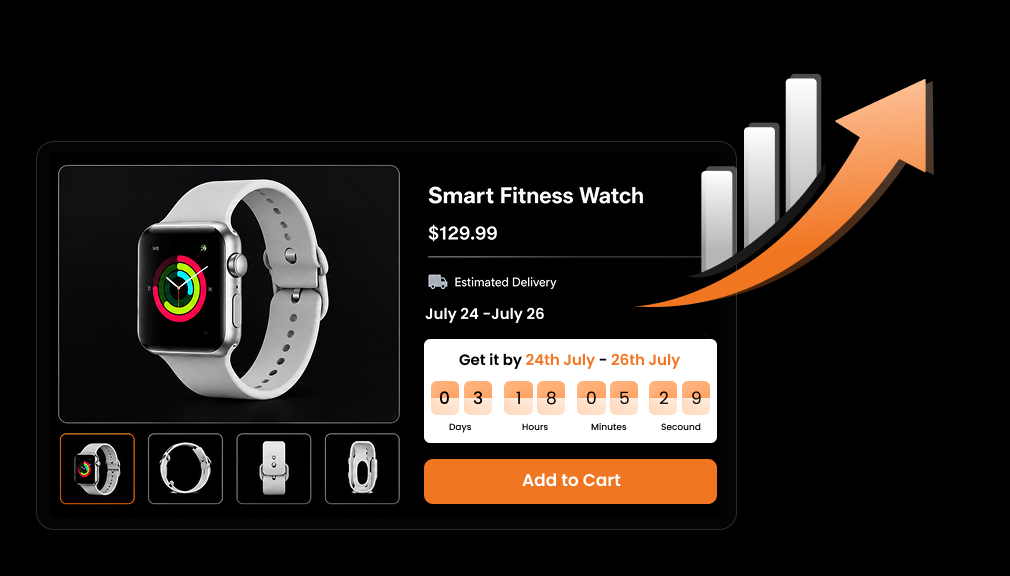
Now picture a better ending. Just below your “Add to Cart” button sits a Delivery Countdown Timer. It reads, “Order within 3 hours 20 minutes to get it by Friday.” Her doubt melts away, and she checks out with real confidence. That is the quiet power of a Delivery Countdown Timer.
A Delivery Countdown Timer shows shoppers how long they have to order. It also shows the exact date their order will arrive. This guide explains why it lifts revenue for Shopify merchants. You will also learn the fastest, safest way to add one.
Key Takeaways
- A Delivery Countdown Timer shows how long shoppers have to order for a set delivery date.
- Timing doubt drives many lost sales, since 40% of shoppers won’t buy without a delivery date.
- The timer removes doubt, adds honest urgency, and builds trust all at once.
- Real stores have cut abandonment and lifted conversions by up to 24% with delivery timers.
- The product page, just below “Add to Cart,” is the best home for your timer.
- A Shopify app is the fastest and safest way to add a Delivery Countdown Timer.
- Custom code can work, but it is fragile, tricky, and limited in features.
The Hidden Reason Shoppers Leave Your Shopify Store
Most Shopify merchants blame price for lost sales. But the real leak is often a missing deadline. Nothing on the page shows shoppers how long they have to order. So they tell themselves “I’ll buy later,” and then drift away. Nearly 70% of online carts are abandoned before checkout, and mobile runs worse, past 85%.
A Delivery Countdown Timer closes this exact gap. It shows a live cutoff, like “Order within 3 hours 12 minutes.” Now shoppers see a closing window, not an open one. That ticking clock turns “later” into “right now.”
The pull of a real order deadline is strong and proven. A 2025 Narvar survey found 40% of shoppers won’t buy without a clear delivery date. When the ordering window stays invisible, doubt fills the gap. A Delivery Countdown Timer replaces that doubt with a ticking answer.
Here is the opening for your store. More than 4 in 10 online shops still show no delivery date or cutoff. That silence sends unsure shoppers straight to a rival. A Delivery Countdown Timer gives them the nudge to buy now.
What a Delivery Countdown Timer Actually Does
A Delivery Countdown Timer is not a flash sale clock. It does not push fake discounts or false scarcity. Instead, it counts down to your real order cutoff time. It answers one question every shopper asks: “How long do I have to order?”
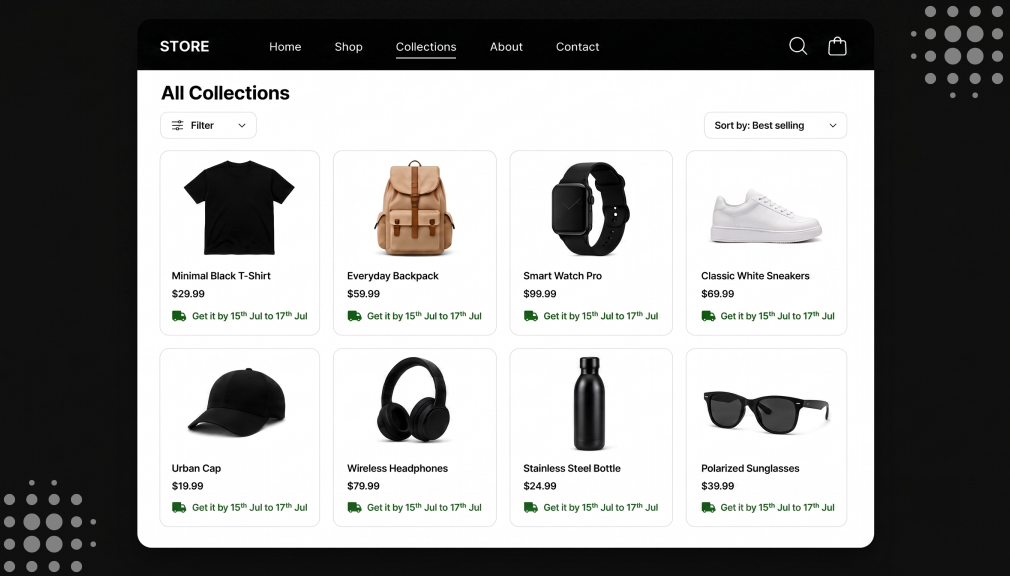
The timer works hand in hand with an estimated delivery date. Together, they form one clear line on your product page. For example: “Order within 4 hours to get it by Tuesday, June 3.” The clock ticks down while the delivery date stays in view.
This is very different from a discount or flash sale timer. Those timers focus on saving money before an offer ends. A Delivery Countdown Timer focuses on arrival, which shoppers care about most. It sells certainty, not pressure, and certainty is what builds trust.
How Delivery Countdown Timers Increase Shopify Revenue
So why does this small feature move the needle so much? It works on three simple human triggers at once. It removes doubt, adds honest urgency, and builds trust.
First, a Delivery Countdown Timer quickly erases delivery doubt. Uncertainty is one of the biggest reasons shoppers hesitate to buy. Research shows more than 75% of buyers are swayed by visible delivery dates. When the date is clear, the fear of a late order fades.
Second, the ticking clock adds gentle, honest urgency. Shoppers can see the cutoff is real and drawing near. This nudges them to decide now instead of “maybe later.”
Third, the timer builds trust through reassurance, not pressure. CRO teams at ConvertCart found delivery timers actually calm buyer anxiety. Shoppers already want the item but fear a timing slip. The timer answers that fear, so they feel safe to buy.
The results show up clearly in real online stores. The brand Gloves added a delivery countdown to product pages. It cut cart abandonment and lifted conversions by 24%. Broader A/B tests show accurate delivery dates raise conversion by 13% to 25%.
Shopify itself reports strong gains from clear delivery promises. Eligible Shop Promise merchants have seen up to a 25% conversion lift. Even a modest bump can add thousands in new monthly revenue.
Reduce Cart Abandonment With a Delivery Countdown Timer
Cart abandonment is the silent tax on every Shopify store. Most shoppers add an item, then pause and never return. A Delivery Countdown Timer breaks that pause with a ticking deadline. It gives shoppers a clear reason to finish the order now.
CRO research shows why this works so well. The best delivery countdown timers do not invent urgency from scratch. Instead, they compress a buying decision the shopper has already made. The ticking clock simply shortens the gap between wanting and buying.
Placement decides how much abandonment you can stop. Product Countdown Timers belong right below the “Add to Cart” button. There, the ticking clock reaches shoppers at the moment of choice. It turns a nervous browser into a confident buyer.
Why “Smart” Delivery Countdown Timers Work Even Better
Not all Delivery Countdown Timers carry the same selling power. A basic timer shows one fixed cutoff to every single visitor. A smart one adjusts the delivery date by location and stock. That accuracy matters more than ever in 2026.
AI now shapes how modern Shopify stores sell and grow. Retailers using AI tools saw 14.2% sales growth in one recent year, versus just 6.9% for stores without them. Smart delivery logic brings that same data edge to your timer.
A smart Delivery Countdown Timer keeps every promise accurate and honest. It updates cutoffs, weekends, and holidays with no manual work. Accurate dates protect both your sales and your store’s name.
Where to Show Your Delivery Countdown Timer
Placement decides how much your Delivery Countdown Timer earns. The product page is the highest-value spot by a wide margin. Place the timer just below your “Add to Cart” button.
You can also repeat the timer in the cart and at checkout. A Shopify order cutoff countdown timer shines in busy seasons too. Gift deadlines like holidays make the ticking clock even stronger.
Two Ways to Add a Delivery Countdown Timer to Shopify Store
There are two main options for Shopify stores that wish to implement the delivery countdown timer feature into their store. There is an option that is quick and safe. The other involves continuous work from the developers and has more limitations.
Option 1: Shopify App-Based Solution (Recommended)
The use of a specialized Shopify application is the most logical option for implementing the delivery countdown timer without any code changes. Applications of this type determine the exact date when the order will be delivered based on the processing time and the chosen shipping method and couriers’ limits. Then they show it on the product page, cart page, and checkout page.
Step 1: Install the app
Choose a Shopify app built specifically for delivery countdowns rather than a generic sales-urgency tool. This ensures the timer reflects real fulfillment data, not a fixed or fake deadline.
Step 2: Connect your processing and shipping rules
Add your warehouse processing time, courier cutoffs, and shipping methods. The app uses these details to calculate an accurate delivery date automatically, so the countdown always matches reality instead of a hardcoded guess.
Step 3: Customize by product, collection, or zone
Set different cutoff times for different products, collections, or shipping zones based on how your fulfillment actually works. This gives you control without adding complexity to your storefront.
Step 4: Display the countdown across key pages
Turn on the live countdown for your product, cart, and checkout pages, so shoppers see a consistent, honest delivery promise wherever they’re deciding to buy.
Step 5: Update rules during peak periods
On days where you have holidays or flash sales, update the rules for your cut-offs right away. You don’t need a developer, no need to modify code, and there is no requirement to wait for themes to change.
One day of warehouse problems or one extra shipping zone will cause problems with a custom script that is hard-coded, but not with an app.
For merchants who want a working example, the Estimated Delivery Date app on the Shopify App Store shows exactly how to set Smart Delivery Countdown Timers in Shopify, with setup steps you can review before installing anything.
Option 2: Custom Shopify Code Solution
Merchants may also use custom Liquid and JavaScript to create a Delivery Countdown Timer. This allows for maximum customization; however, there are significant drawbacks to this option that you should consider:
- Manual updates are required every time shipping cutoffs, holidays, or courier schedules change.
- Time zone handling across international customers often breaks without constant testing.
- Theme updates can silently remove or break the custom code, causing the timer to disappear.
- There is no built-in logic for weekends, holidays, or regional delivery exceptions.
- Ongoing developer hours are needed just to keep the countdown accurate, which adds hidden costs over time.
Because of these limitations, most Shopify merchants find that a custom code solution works only as a short-term test. For a countdown that stays accurate as your business grows, an app-based Delivery Countdown Timer is the more reliable long-term choice.
Conclution
That uncertainty customers experience while checking out, “will this really be delivered on time?” is robbing you of sales daily without even being aware of it. And a Delivery Countdown Timer does just that by removing the uncertainty and replacing it with an honest guarantee: “order before this time to receive your order by this date.”
Needless to say, the statistics don’t lie. Retailers who use delivery countdowns have seen reductions in cart abandonment and increased conversion rates up to 24% thanks to that extra assurance.
Custom coding may be done, but then maintenance becomes a problem, and the countdown may easily break. But with a dedicated app such as Estimated Delivery Date, you get reliable automated countdowns without any trouble.
If delivery uncertainty silently robs you of sales, a Delivery Countdown Timer should be one of the easiest fixes for you to implement.
Frequently Asked Questions
How to add a delivery countdown timer in Shopify?
The easiest way is to install a dedicated Shopify app from the App Store. The Estimated Delivery Days app lets you add a Delivery Countdown Timer without any code. You set your order cutoff and shipping days, then place the timer on your product page. It goes live in minutes and needs no developer help.
How do delivery countdown timers increase Shopify revenue?
Delivery Countdown Timers increase revenue by removing the doubt that stops shoppers from buying. They show a clear order cutoff and a firm delivery date on the product page. This added confidence lifts conversions, and tests show gains of 13% to 25%. Less hesitation simply means more completed orders and higher daily sales.
What is the best delivery countdown timer app for Shopify?
The best delivery countdown timer app is one that pairs the timer with an accurate delivery date. The Estimated Delivery Days app does this and handles cutoffs, weekends, and holidays for you. It also lets you match the timer to your brand and place it anywhere. This mix of accuracy and ease makes it a strong pick for most merchants.
What is a Shopify order cutoff countdown timer?
A Shopify order cutoff countdown timer shows how long shoppers have to order for the next dispatch. For example, it may say “Order within 2 hours for same-day dispatch.” The clock ticks down to your real cutoff time each day. This creates honest urgency and helps shoppers act before the deadline passes.
How to create urgency in Shopify the right way?
The best way to create urgency in Shopify is with a real, honest deadline. A Delivery Countdown Timer does this by counting down to your true order cutoff. It pushes shoppers to buy now without fake scarcity or false discounts. This keeps trust high while still speeding up the buying decision.
Can a countdown timer speed up Shopify conversions?
Yes, a Delivery Countdown Timer speeds up conversions by shortening the decision time. Shoppers who see a clear cutoff feel a gentle push to act now. This removes the “I’ll decide later” delay that kills so many sales. Faster decisions mean more orders and far less lost traffic.

Shopify Expert
Dipen Panchal, Shopify Tech Lead at Setubridge Technolabs, brings over a decade of expertise as a Shopify Expert. Passionate about e-commerce growth, he specializes in UI/UX design, crafting intuitive, engaging solutions tailored for merchants and B2B clients to enhance user experiences.